
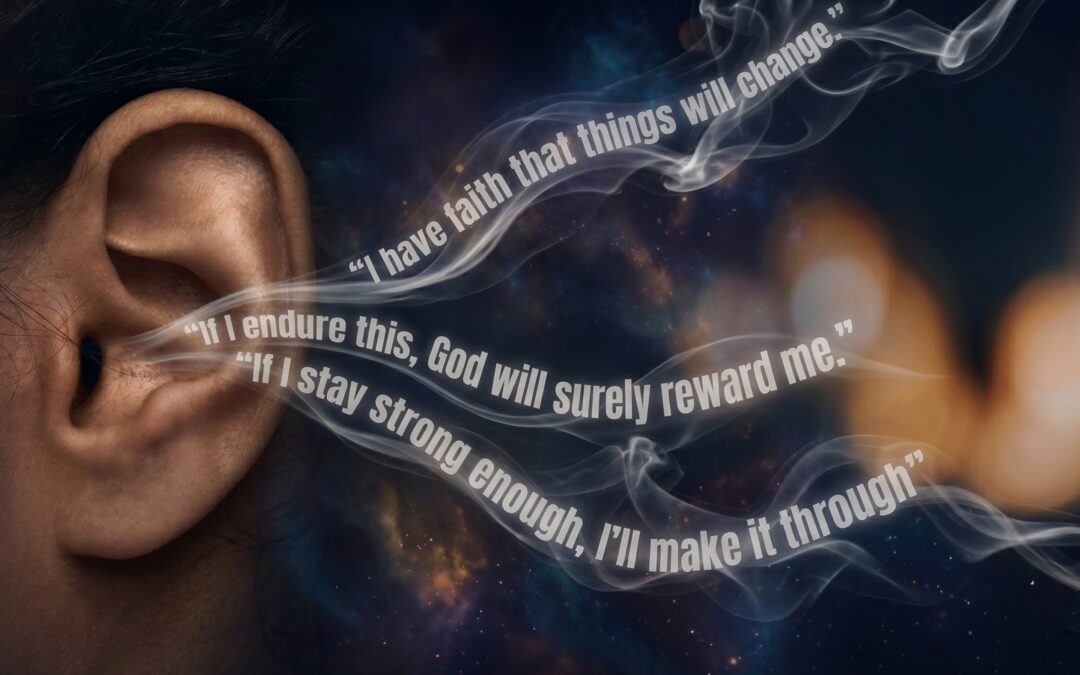
Some words sound encouraging in the middle of pain, but if they are incomplete, they can quietly move our joy away from Christ.
I have been a Christian for a long time. Over the years, I have seen and heard so many things as a believer. I have seen things that strengthened my faith. I have experienced moments that could only be attributed to God’s sovereign power, His mercy, and His grace.
But somewhere in the middle of all those beautiful things, I have also heard many statements that were not always expressed correctly.
And if I’m honest, some of those statements affected me.
Maybe more than I realized.
They shaped the way I thought about trials. They shaped the way I responded to pain. They shaped the way I understood faith, endurance, sorrow, and even the joy of the Lord.
Let me explain what I mean.
I remember sitting in a church pew in my small church. The place was packed, and the invited preacher was speaking about something everyone could relate to: trials. He was passionate. He had everyone’s attention. And then he said something that went straight into my heart.
“Endure the trial! Endure the situation! And God will meet you on the other side with your prize, with your victory!”
At that moment, I needed to hear something hopeful. I was going through a very difficult season, so I absorbed those words like a sponge. They comforted me. They made me believe that if I could just survive what I was going through, God would eventually reward me with something much better than the pain I was experiencing.
During that same season, my own grandmother was verbally abusing me and spreading lies about me to people in the congregation. It was painful. Confusing. Embarrassing. And lonely.
Some people came to me with an honest desire to encourage me. They would say things like:
“Have faith that things will change.”
“You’re young. Be strong. You’ll make it through.”
“Pray for clarity. God must be allowing this for a reason.”
“Something big must come out of this.”
“He must be preparing you for something great.”
Now, let me be clear. I do believe people meant well. I don’t think most of these statements came from bad intentions. But over time, they created an incomplete understanding in me.
I started believing that sorrow was weakness.
I started believing that if I showed pain, I was somehow failing God.
I thought joy and sorrow could not exist in the same heart.
I thought staying strong was how I pleased God.
I thought every trial needed to end with a visible reward, a breakthrough, or a clear explanation in order for it to have meaning.
But I was wrong.
Thankfully, over the years, God has helped me develop a healthier understanding of the joy of the Lord. And honestly, it has become one of my favorite things to study. Maybe because I still need to be reminded of it. Maybe because my hardheadedness continues to get me into situations where I need God to correct my thinking all over again.
So I want to share seven incomplete beliefs we can sometimes carry when going through trials. They may sound spiritual. They may even sound encouraging. But if we are not careful, they can quietly move our joy away from Christ and attach it to circumstances, performance, answers, or outcomes.
1. “I have faith that things will change.”
This sounds good at first.
And of course, God can change things. He can open doors. He can heal. He can restore. He can turn situations around in ways we never imagined.
But the statement becomes incomplete when our joy depends on whether things change.
If my faith is only focused on a future outcome, then my joy becomes a hostage to something I cannot control. What happens if the situation does not change quickly? What happens if the person does not apologize? What happens if the sickness remains? What happens if the door stays closed?
Does that mean God is absent?
No.
True joy is not rooted in the certainty that my circumstances will change. True joy is rooted in the certainty that Christ is with me right now.
Sometimes the first change God brings is not around me. It is within me.
A healthier belief would be:
“I have faith that Christ is with me and is actively working in me, whether or not my circumstances change.”
That kind of faith does not deny the desire for things to get better. It simply refuses to make improvement the foundation of joy.
2. “If I endure this, God will surely reward me.”
This one is tricky because the Bible does speak about endurance. It speaks about perseverance. It speaks about reward. It speaks about not giving up.
But this belief becomes unhealthy when we start treating suffering like a transaction.
“If I suffer well, God will owe me something.”
“If I endure long enough, God will reward me with the outcome I want.”
“If I survive this, then I will finally be special to God.”
But the gospel teaches something far better than that.
God’s love is not something I earn through suffering. God’s favor is not a prize waiting for me at the finish line of my pain. In Christ, I am already loved. Already accepted. Already held. Already His.
Endurance is not how I purchase God’s affection.
Endurance is how I respond to the grace I have already received.
A healthier belief would be:
“I endure because God has already loved me in Christ, and my suffering can deepen my trust in Him.”
That changes everything.
Now I am not suffering to earn God’s love. I am suffering while being carried by it.
3. “I will have joy once I understand why this is happening.”
I have definitely wrestled with this one.
When we are hurting, we want answers. We want the story to make sense. We want to know why God allowed it, why people behaved the way they did, why the timing was so painful, and why the situation had to unfold the way it did.
But if joy depends on understanding, then joy may never come.
Because the truth is, we may not always get the full explanation.
There are things we may not understand on this side of eternity. There are seasons where we only see a small piece of what God is doing. And sometimes, the “why” remains hidden.
But peace does not have to wait for explanation.
Joy does not have to wait until everything makes sense.
The peace of God surpasses understanding. That means God can give peace even when understanding has not arrived yet.
A healthier belief would be:
“I can experience the peace and joy of God even when I do not understand why this is happening.”
That does not mean we stop asking questions. It means our questions do not have to become the foundation of our faith.
4. “If I stay strong enough, I’ll make it through.”
This belief sounds noble. It sounds brave. It sounds like something we would put on a motivational poster.
But it can become dangerous.
Because eventually, human strength runs out.
There is only so much we can carry. There is only so much pressure we can absorb. There is only so long we can pretend we are fine when we are not.
And here is the beautiful truth: God never asked us to be strong enough without Him.
The Christian life is not built on self-sufficiency. It is built on Christ-sufficiency.
Paul did not say, “I can do all things because I am naturally strong.” He said he could do all things through Christ who strengthened him. His confidence was not in his own ability to remain unshaken. His confidence was in the One who sustained him.
A healthier belief would be:
“When I am weak, I do not need to rely on my own strength. I can depend on Christ to sustain me.”
Sometimes the most spiritual thing we can say is not, “I’m strong.”
Sometimes it is, “Lord, I am weak, and I need You.”
5. “God must be pleased with me because I’m handling this well.”
This one can sneak into our hearts quietly.
When we feel like we are responding well, praying more, crying less, staying composed, or appearing strong, we can start to think, “God must be pleased with me because I’m doing a good job.”
But that puts the foundation in the wrong place.
God’s pleasure in His children is not based on how perfectly we handle suffering. It is based on Christ.
If I believe God is pleased with me only when I am handling things well, then what happens when I fall apart? What happens when I cry? What happens when I get tired? What happens when I feel confused, discouraged, or afraid?
Has God’s love changed?
No.
My performance may change. My emotions may change. My ability to handle pressure may change. But Christ’s finished work does not change.
A healthier belief would be:
“God’s pleasure in me is rooted in Christ, not in my ability to handle this trial perfectly.”
That does not make obedience unimportant. It simply puts obedience in the right place.
We obey from love.
We do not obey to earn love.
6. “This trial is only valuable if something good comes out of it.”
We love testimonies with visible endings.
The sickness was healed. The job came through. The relationship was restored. The financial need was met. The door opened.
And those stories are beautiful.
But what happens when the good that comes out of a trial is not visible? What happens when there is no dramatic ending? What happens when the “good” is not something we can post, explain, or measure?
Does that mean the trial was wasted?
No.
God often works in ways we cannot immediately see. Sometimes He is deepening our compassion. Sometimes He is exposing false securities. Sometimes He is teaching us dependence. Sometimes He is drawing us closer to Christ.
The value of a trial is not limited to whether we can identify a visible benefit.
The greatest good is not always a changed situation.
Sometimes the greatest good is deeper fellowship with Jesus.
A healthier belief would be:
“This trial is valuable because God can use it to draw me closer to Christ, even if I never see the full outcome.”
That does not make pain good in itself. Pain is still painful. Suffering is still suffering. But God is powerful enough to work in the middle of it.
7. “Joy means I should not feel sorrow.”
This may be one of the most damaging incomplete beliefs.
Somewhere along the way, many Christians have learned to equate joy with always smiling, always being positive, always saying the right thing, and never admitting pain.
But that is not biblical joy.
Paul described himself as sorrowful, yet always rejoicing.
Jesus was called a man of sorrows, yet He lived in perfect fellowship with the Father.
So if Jesus could experience sorrow without sin, and Paul could experience sorrow while rejoicing, then sorrow and joy are not enemies.
Joy does not mean I never grieve.
Joy means grief does not get the final word.
There is such a thing as crying with hope. There is such a thing as worshiping with tears in your eyes. There is such a thing as feeling deep pain while still knowing that Christ is present, faithful, victorious, and good.
A healthier belief would be:
“True joy can coexist with sorrow because my joy is rooted in Christ, not in the absence of pain.”
That truth is freeing.
I do not have to pretend.
I do not have to perform.
I do not have to fake a smile to prove I have faith.
I can grieve honestly and still rejoice deeply.
The Pursuit of True Joy
When I look back at these seven incomplete beliefs, I notice they all have something in common.
They attach joy to the wrong thing.
Joy after things change.
Joy after I endure.
Joy after I understand.
Joy if I stay strong.
Joy if I handle things well.
Joy if something good comes out of it.
Joy if I stop feeling sorrow.
But true joy does not begin with my circumstances, my strength, my understanding, my performance, or my emotional condition.
True joy begins with Christ.
It begins with who He is.
It begins with what He has already done.
It begins with the reality that I belong to Him.
That does not mean trials stop hurting. It does not mean sorrow disappears. It does not mean every question gets answered. It does not mean every situation changes the way I hoped.
But it does mean joy is possible right here.
In the middle.
Before the breakthrough.
Before the answer.
Before the explanation.
Before the visible reward.
Because joy is not the prize waiting on the other side of suffering.
Joy is the gift of Christ’s presence in the middle of it.
And maybe that is what I needed to learn all along.
God is not only waiting for me on the other side.
He is with me in the valley.
He is with me in the prison cell.
He is with me in the tears.
He is with me when I do not understand.
He is with me when I feel weak.
He is with me when sorrow and worship are coming out of the same heart.
So today, I am learning not to chase joy as if it is somewhere ahead of me.
I am learning to receive it where Christ already is.
Right here.
Right now.
Even in this.
Truly blessed to have read this article! His timing is always perfect!
Amen, I am so glad the article blessed you. And yes, God’s timing is perfect, yet I am still learning how to wait on him… LOL!
Deep! After so many years since last seeing you, it thrills my heart to see the depth of your faith and understanding in Christ. Many blessings to you and your family.
Wow! I am so humbled to hear those words from someone who nurtured my faith in my teen years. It has been a journey, and I don’t want to lose sight of all the wonderful things God has done in my life.